1. The Dilemma of Sourcing Alone: Why 80% of Buyers Overpay
If you search for suppliers on Alibaba, Global Sources, or Made-in-China, you will encounter thousands of gold suppliers promising factory prices, perfect quality, and fast turnaround. But here is the reality we see every single week at our headquarters in Shenzhen:
More than 65% of suppliers on international directories are commercial trading companies, not original equipment manufacturers (OEMs). They add a 20% to 35% markup to the factory price, communicate with you in fluent English, and strictly forbid you from ever seeing the actual assembly line. When quality defects arise, they blame the "subcontractor" and disappear with your deposit.
Hiring a genuine China sourcing agent is intended to solve this problem by placing an experienced, bilingual advocate on the factory floor. However, hiring the wrong agent can be just as disastrous. Rogue individuals and unregulated agencies frequently accept secret kickbacks (huikou, 回扣) from substandard suppliers while charging you a service fee.
According to commercial records from the National Enterprise Credit Information Publicity System (GSXT), thousands of intermediaries operate without legitimate export manufacturing licenses. This guide breaks down exactly how to evaluate, test, and partner with a trustworthy sourcing agency in China.
2. What Does a Legitimate China Sourcing Agent Actually Do?
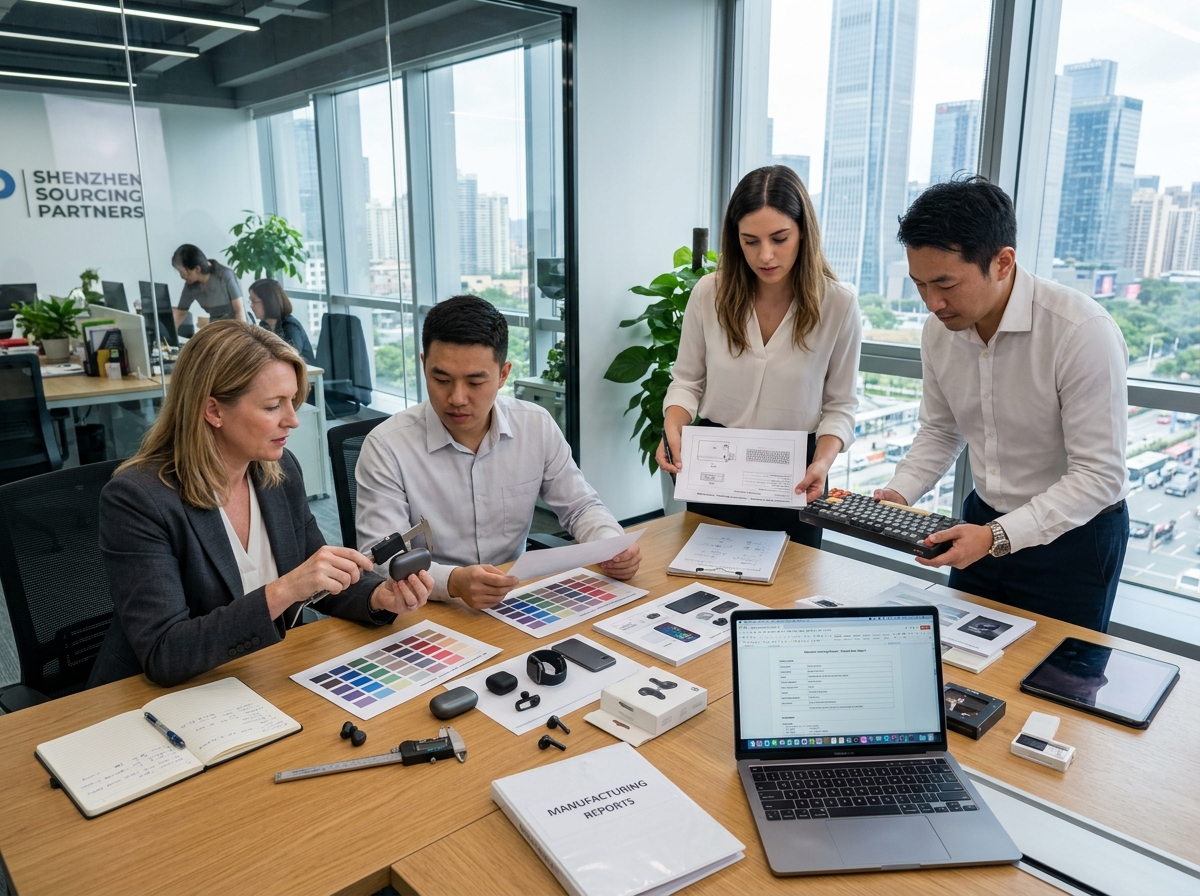
A legitimate sourcing agent is not simply someone who finds an Alibaba link and emails you a quote. A professional agency operates as your dedicated purchasing office in China, executing five critical operational functions:
Factory Matching in Industrial Clusters
Instead of relying on online search engines, they source directly from regional manufacturing clusters, such as sourcing electronics in Shenzhen, furniture in Foshan, hardware in Yongkang, or luggage in Guangzhou.
Domestic Price Negotiation & Contract Signing
Negotiating in Mandarin using domestic 1688 and direct factory relationships to eliminate the "foreigner markup." They draft bilingual purchase contracts enforceable under Chinese commercial law.
Sample Prototyping & OEM Customization
Inspecting raw material samples, coordinating custom tooling and molds, and ensuring color accuracy before mass production begins.
On-Site Quality Control (AQL 2.5 Standards)
Conducting During-Production (DUPRO) and Pre-Shipment Inspections (PSI) inside the factory, testing functionality, packaging integrity, and barcoding.
Warehousing, Kitting & Consolidated Shipping
Storing inventory in clean Shenzhen or Ningbo warehouses, consolidating goods from multiple factories into a single container, and managing customs export documentation.
A true sourcing agency acts as a fiduciary. They work exclusively for you, share the original Chinese factory invoices with full transparency, and earn a declared fee. If an agent refuses to reveal the manufacturer's name or address, they are acting as an opaque trading company, not your agent.
3. Sourcing Agent vs. Trading Company vs. Direct Factory
To make the right choice for your supply chain, compare how these three models function in practice:
| Criteria | Direct Factory (OEM) | Trading Company | Professional Sourcing Agent |
|---|---|---|---|
| Pricing Transparency | High (Factory unit cost) | Zero (20–40% hidden markup) | 100% Open Book (Factory invoice + agreed fee) |
| Minimum Order Quantity (MOQ) | High (Often 1,000–3,000 pcs) | Medium (Can consolidate) | Flexible (Negotiates factory trial runs) |
| Communication & English | Basic / Technical | Fluent Commercial | Fluent Bilingual Account Managers |
| Quality Control & Inspection | Self-reported (Biased) | Minimal (Protects profit) | Independent AQL 2.5 Defect Audits |
| Consolidation Capabilities | Single product line only | Limited to their catalog | Consolidates unlimited factories into 1 box/container |
| Best Suited For | Orders exceeding $100,000+ in single SKUs | Quick off-the-shelf catalog buying | eCommerce sellers, Amazon FBA, Custom OEM & growing brands |
4. The 4 Sourcing Agent Fee Models: What Should You Pay?
One of the first questions clients ask me is: "Mehboob, what is the standard fee for a sourcing agent in China?" There are four primary fee structures in the industry:
Model 1: Percentage of Order Value (5% to 10%): The Industry Standard
This is the model used by reputable full-service agencies, including Best China Sourcing Agency. The agent charges a sliding commission based on total procurement volume:
- $5,000 – $20,000 order: 8% to 10% fee
- $20,000 – $50,000 order: 6% to 8% fee
- $50,000+ order: 4% to 6% fee
Why it works: The agent's interests align with yours. They handle factory negotiations, pre-production samples, quality control audits, warehousing, and shipping logistics.
Model 2: Fixed Project Fee ($300 – $1,500)
Best for brands that only need supplier discovery and validation. You pay a one-time retainer, and the agent delivers a vetted dossier containing 3 to 5 verified factories, price comparisons, and sample evaluations. You then handle ongoing orders yourself.
Model 3: Hourly or Daily Consulting Rates ($150 – $500/day)
Typically used when hiring an individual inspector to accompany you to trade shows (like the Canton Fair or Yiwu International Trade Market) or conduct a one-day factory audit in Guangdong or Zhejiang province.
Model 4: "Zero Commission" / "Free Sourcing": The Major Trap
No business operates for free. Agencies advertising "0% commission" make their money by negotiating a $10 factory price and quoting you $13.50. You end up paying a 35% hidden markup while receiving zero quality protection, zero invoice transparency, and zero loyalty.
5. 6 Red Flags When Vetting a China Sourcing Company
Before wiring any money or sharing proprietary product designs, check for these six common danger signs:
- Refusal to provide the factory's Chinese name and address: If they say "factory confidentiality forbids sharing the name," they are a trading middleman marking up the price.
- No registered Chinese mainland entity: Foreign-registered paper companies with no domestic Chinese business license (营业执照) have no legal standing to inspect factories or enforce contracts.
- Unrealistically low quotes: If an agent quotes 40% below average market price, they are quoting an inferior grade of plastic, thinner steel, or recycled scrap material.
- Refusal to accept third-party quality inspections: A trustworthy agent welcomes independent pre-shipment quality audits.
- Demanding 100% payment upfront: Never pay 100% before production. Standard terms are 30% deposit upon contract signing and 70% balance only after passing pre-shipment AQL inspection.
- No physical warehouse in China: Agents without physical warehousing cannot consolidate goods, inspect cartons, or perform Amazon FBA prep.
6. The 7-Point Vetting Checklist for 2026
Copy and paste these exact questions when interviewing prospective sourcing agents:
- "Where is your physical office and warehouse located in China?" (Look for Shenzhen, Guangzhou, Ningbo, or Yiwu).
- "Will you share the original factory invoices, direct contacts, and tax IDs with me?" (The answer must be yes).
- "How do your inspectors conduct quality control, and what AQL standard do you use?" (Expect AQL 2.5 / 4.0 defect classification).
- "How do you handle supplier delays or defective production batches?"
- "Do you accept payment through secure escrow or international corporate accounts?"
- "Can you provide references from clients in my industry?"
- "Are you willing to sign a bilingual Non-Disclosure and Non-Compete Agreement (NNN) before I share product files?"
7. Real-World Case Study: How a UK Amazon Seller Saved $42,000
The Problem: The client was ordering silicone kitchen utensils through an Alibaba gold supplier for $3.80 per unit, ordering 20,000 units annually. Their defect rate had climbed to 7.4%, triggering dozens of 1-star Amazon reviews and threat of listing deactivation.
Our Investigation: We pulled the supplier's Chinese unified social credit code and discovered they were a 2-person trading company in Hangzhou with zero manufacturing equipment. They were brokering production to a third-tier sub-factory in Yangjiang that used non-food-grade silicone scrap.
Our Intervention:
- Audited 3 certified FDA/LFGB silicone manufacturers directly in Yangjiang.
- Negotiated the real factory price down to $2.15 per unit (a 43% unit cost reduction).
- Implemented in-line AQL 1.5 inspection during curing and post-curing baking.
- Provided 30 days free storage in our Shenzhen facility, applying FNSKU barcode labels and direct DDP shipping to Amazon UK fulfillment centers.
The Result: The client saved $42,100 in their first year, their return rate dropped from 7.4% to 0.2%, and their Amazon listing achieved the Best Seller badge in its sub-category.
🔗 Related Sourcing Solutions from Our Shenzhen Team
Explore how our boots-on-the-ground team protects your margin and ensures zero-defect supply chains:
Frequently Asked Questions
Standard transparent sourcing commissions range between 5% and 10% of total order value for end-to-end service (factory sourcing, price negotiation, sample inspection, production monitoring, quality audits, and freight forwarding). Any agent claiming 0% commission is invariably earning a 15% to 30% hidden markup from the factory.
A genuine sourcing agent acts as your fiduciary representative: you receive open-book factory invoices, direct factory contact, and pay a transparent fee. A trading company buys low from a factory, marks up the price by 20% to 40%, hides the manufacturer identity, and owns the relationship.
You should hire a sourcing agent when your annual China purchasing exceeds $15,000, when you require custom packaging or product modifications (OEM/ODM), when sourcing across multiple product categories, or when you cannot physically visit China for factory audits.