
1. The 30% Deposit Trap: Why Wiring First Is Dangerous
In international trade with China, the standard payment term is 30% T/T deposit before production starts, and 70% balance before bill of lading release. But here is the vulnerability that unscrupulous operators exploit:
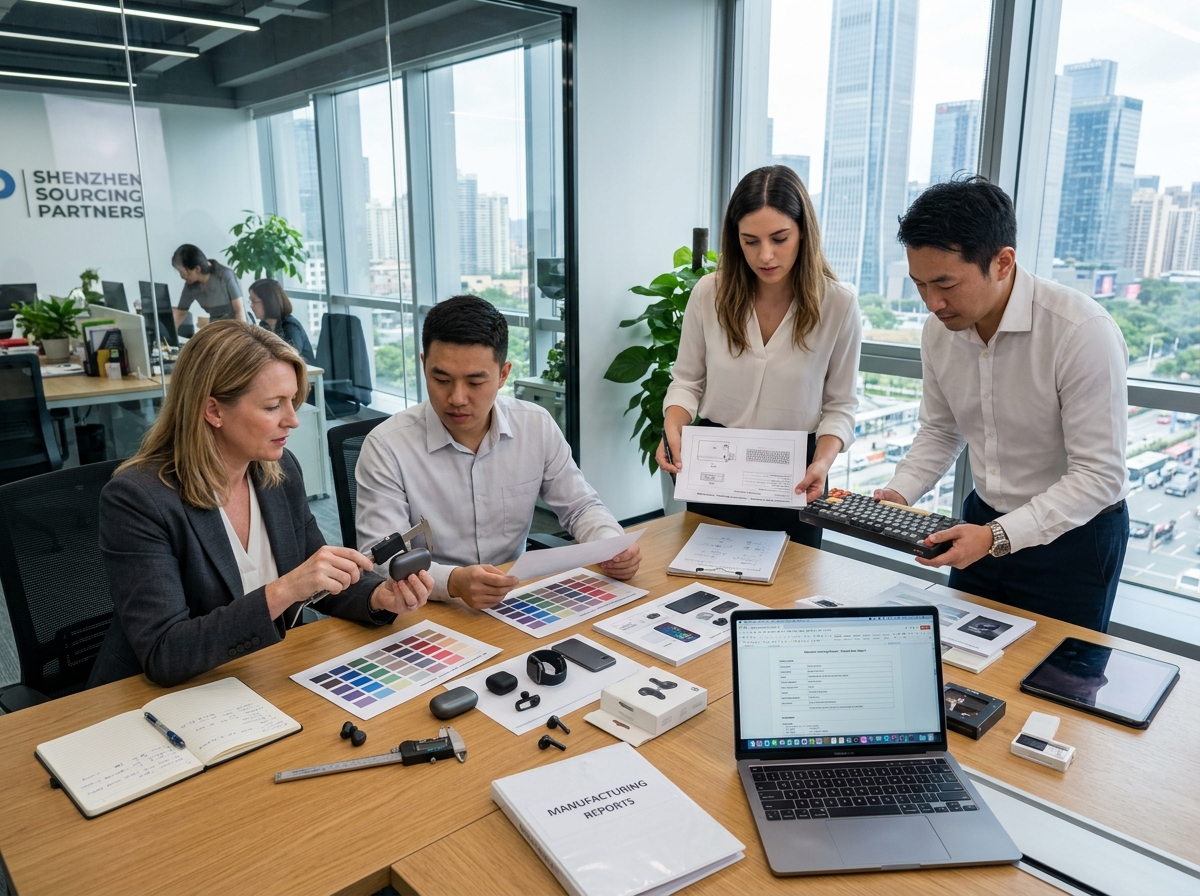
A supplier sends you an impeccably crafted golden prototype sample. Convinced they are a tier-1 manufacturer, you wire a $15,000 deposit to their bank account. Once the money is received:
- Production suddenly faces "unexpected material shortages," delaying your delivery by 8 weeks.
- When goods finally arrive in your country, the plastic is brittle, seams are torn, and 20% of units are non-functional.
- When you complain, the supplier claims: "You signed off on production. No refunds."
Once your wire transfer leaves your account, your leverage drops to near zero. The only effective defense is conducting rigorous pre-deposit supplier verification followed by pre-shipment ISO 2859-1 (AQL 2.5) quality audits.
2. Government Business License Verification (The GSXT Database)
Never rely on a PDF certificate emailed by a sales representative. PDFs can be photoshopped in five minutes. In China, every legally registered company must appear in the official National Enterprise Credit Information Publicity System (GSXT: 国家企业信用信息公示系统) maintained by the State Administration for Market Regulation.
Obtain the Unified Social Credit Code (USCC)
Request their official Business License (营业执照). Look for the 18-digit Unified Social Credit Code (统一社会信用代码) at the top of the document.
Cross-Reference on the Government GSXT Registry
Search the 18-digit code on gsxt.gov.cn or enterprise search platforms (Qichacha / Tianyancha). Confirm the registered company name, legal representative (法定代表人), and registered address.
Review Registered Capital & Paid-in Capital
In China, registered capital (注册资本) can be subscribed over 30 years without being physically deposited. Look at Paid-in Capital (实缴资本) to see if the owners actually invested capital into the enterprise.
Audit Court Judgments & Operational Abnormalities
Check if the entity is listed on the "Abnormal Operations Directory" (经营异常名录) or has active civil court enforcement orders for unpaid suppliers or wage disputes.
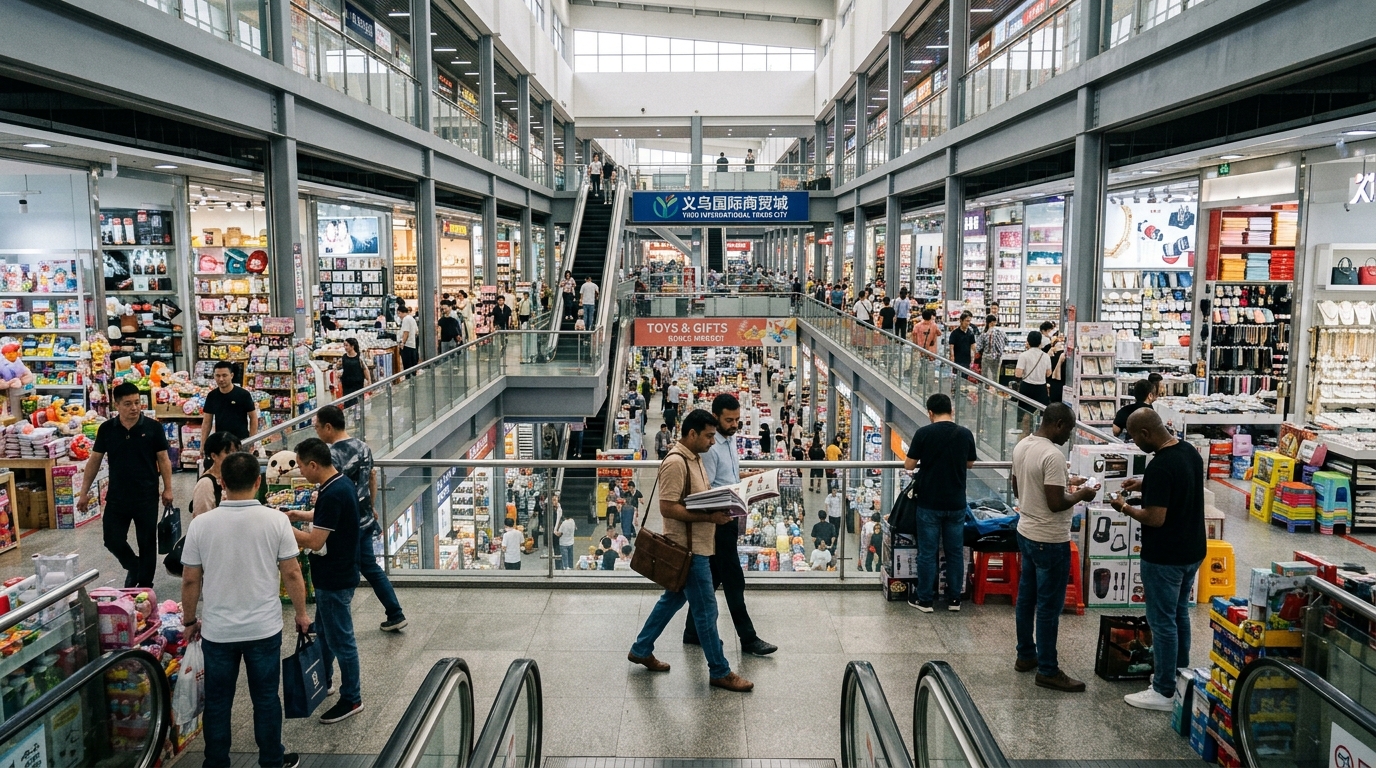
3. How to Spot a Trading Company in the Business Scope
The single most powerful trick in Chinese supplier vetting is reading the Business Scope (经营范围) on their business license:
| Chinese Characters | English Translation | What It Reveals |
|---|---|---|
生产, 制造, 加工, 研发 |
Production, Manufacturing, Processing, R&D | Real Factory (Licensed to operate industrial machinery and workshops) |
销售, 批发, 进出口, 贸易 |
Sales, Wholesale, Import & Export, Trade | Trading Middleman (Commercial broker with an office, zero machinery) |
技术服务, 信息咨询 |
Technical Service, Information Consulting | Service Broker (Virtual office or individual agent) |
Under Chinese industrial law, a company cannot legally list "Production or Manufacturing" in their business scope without passing government environmental impact assessments and fire safety inspections. If a company's business scope only says "Sales and Trade," they are 100% legally prohibited from operating a manufacturing plant, meaning they are sub-contracting your goods to an unknown third party.
4. The On-Site Factory Audit Checklist (What Our Inspectors Examine)
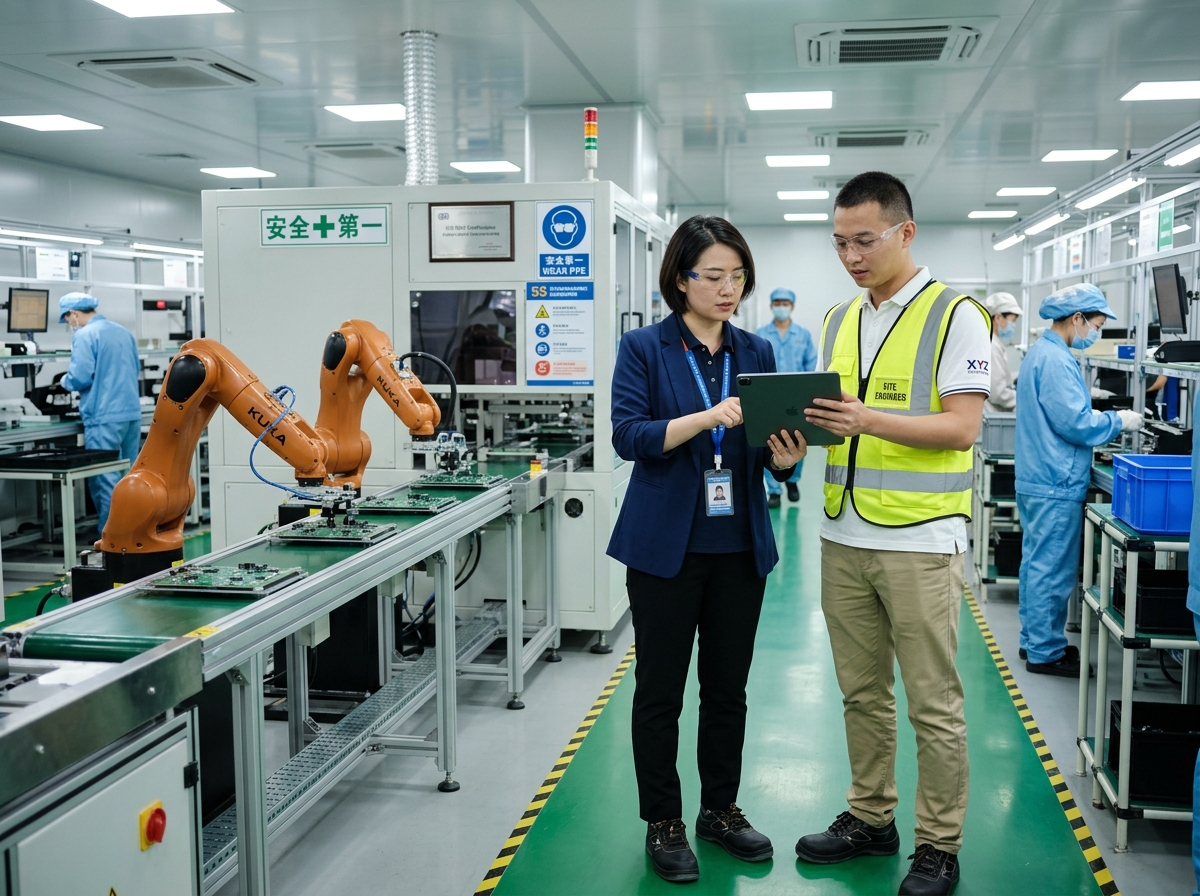
Paperwork is only step one. A genuine factory audit requires boots on the ground. When our inspectors travel to a factory in Guangdong or Zhejiang, they execute a 6-phase physical audit:
Facility Ownership & Physical Boundaries
Verify factory signage matches the business license name. Inspect total square footage, number of production buildings, and lease agreements.
Active Assembly Lines & Machine Capacity
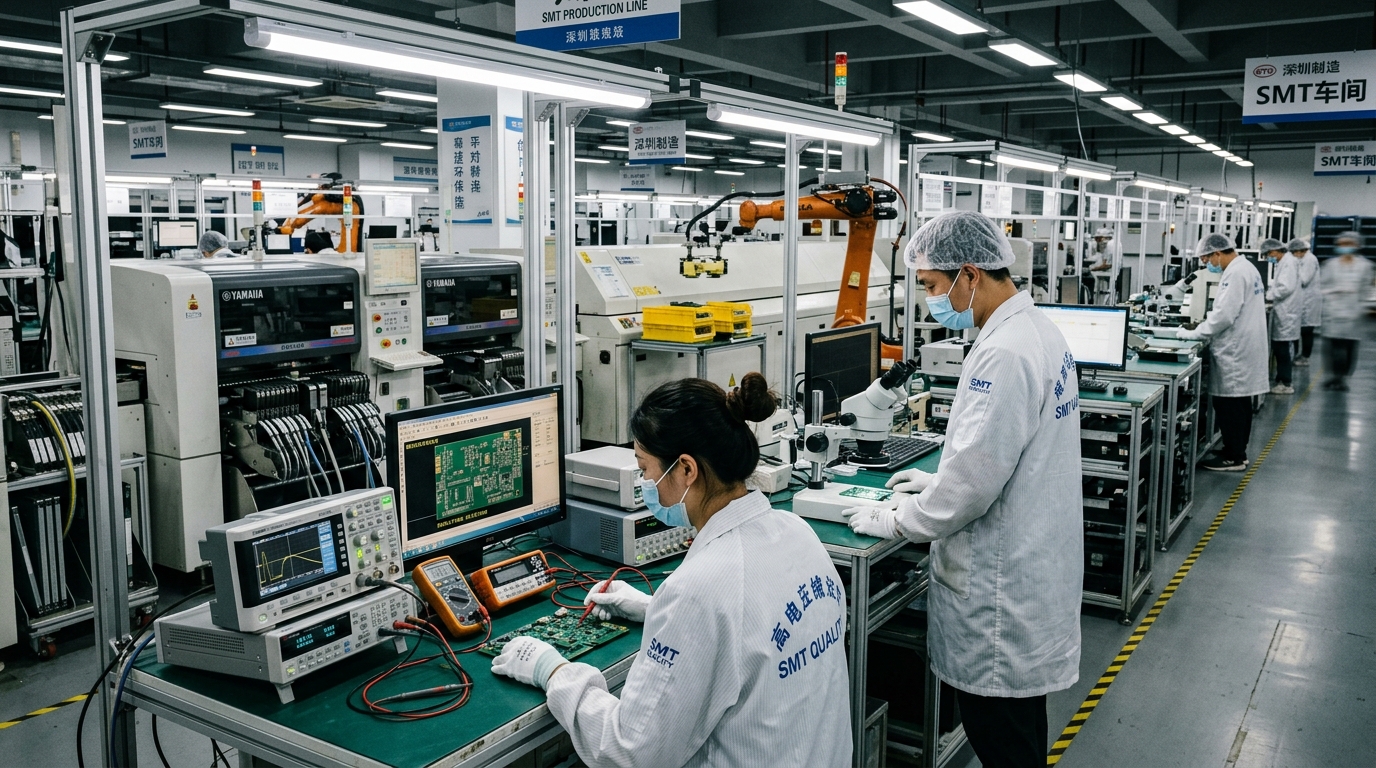
Count operational automated injection molding machines, CNC centers, or SMT lines. Ensure machines are actively producing, not switched off as a showroom display.
Workforce Verification & Headcount
Examine active worker headcount on the assembly line versus what the sales manager claimed online. A claimed "500-worker mega-plant" often turns out to have only 25 workers.
Raw Material Quality & Storage Conditions
Inspect raw plastic resin pellets, steel coils, or fabric bolts. Verify they are stored off the ground in climate-controlled areas away from moisture and direct sunlight.
In-House Quality Testing Equipment
Verify calibrated testing instruments: salt-spray chambers for metal rust, drop-test platforms, tensile strength testers, and digital colorimeters.
5. AQL 2.5 Defect Sampling Tables: International Quality Standard
You cannot inspect every single screw or seam in a 20,000-unit production run. Instead, global supply chains use ISO 2859-1 / ANSI/ASQ Z1.4 (AQL Standard) to determine statistical sample sizes:
| Total Order Size (Units) | Sample Size Inspected | Critical Defects (AQL 0) | Major Defects (AQL 2.5) | Minor Defects (AQL 4.0) |
|---|---|---|---|---|
| 501 – 1,200 pcs | 80 pcs | 0 allowed | Max 5 allowed | Max 7 allowed |
| 1,201 – 3,200 pcs | 125 pcs | 0 allowed | Max 7 allowed | Max 10 allowed |
| 3,201 – 10,000 pcs | 200 pcs | 0 allowed | Max 10 allowed | Max 14 allowed |
| 10,001 – 35,000 pcs | 315 pcs | 0 allowed | Max 14 allowed | Max 21 allowed |
• Critical Defect (0 Allowed): Any defect causing user danger, electrocution risk, sharp exposed metal, or trademark violation. 1 critical defect = immediate batch rejection.
• Major Defect (2.5%): Product fails its core functional purpose (e.g. bluetooth won't pair, lid won't seal, zipper jams).
• Minor Defect (4.0%): Cosmetic imperfections that don't affect function (e.g. slight scratch, minor paint inconsistency, loose thread).
6. Case Study: Uncovering a Phantom Electronics Factory in Dongguan
The Situation: The client was preparing to wire a $35,000 deposit for 5,000 custom smart video doorbells. The supplier presented an impressive English website showing video tours of a 6-story factory in Dongguan with automated SMT cleanrooms.
Our Investigation: Before releasing the wire, the client engaged our Shenzhen team to conduct a factory audit. Our senior inspector drove to the registered industrial address in Dongguan. Upon arrival:
- The 6-story building belonged to an unrelated textile manufacturer.
- The "smart doorbell company" rented a small 40-square-meter room on the 4th floor with 3 desks and zero assembly equipment.
- The videos on their website were stock footage stolen from an electronics OEM in Huizhou.
- They planned to subcontract the circuit boards to a non-certified garage workshop and keep the profit spread.
The Outcome: We aborted the contract immediately, saving the client $35,000 in direct loss. We then matched the client with an authentic ISO9001-certified smart camera OEM in Shenzhen, delivering certified CE/RoHS units at a 12% lower unit cost.
🔗 Related Quality Assurance & Factory Verification Services
Ensure your production runs are 100% compliant before releasing wire payments:
Frequently Asked Questions
Request their official Chinese Business License (营业执照) and check their Business Scope (经营范围) on the National Enterprise Credit Information Publicity System (GSXT). If the scope only contains words like 'sales', 'wholesale', or 'trade' (销售, 批发, 贸易) and lacks 'manufacturing', 'processing', or 'production' (生产, 加工, 制造), they are a trading company, not a real factory.
AQL (Acceptance Quality Limit) 2.5 is the international statistical standard (ISO 2859-1) used to inspect mass production. Out of a sample batch, it sets the maximum allowable defective units: Critical Defects (0 allowed), Major Defects (2.5% threshold), and Minor Defects (4.0% threshold). If defects exceed this limit, the buyer is justified in holding back the 70% balance payment until the factory fixes the batch.
A professional on-site factory audit in major manufacturing provinces (Guangdong, Zhejiang, Jiangsu, Fujian) typically costs between $280 and $450 per man-day, including inspector travel, photographic verification of assembly lines, business license validation, and a comprehensive 25-page audit report.